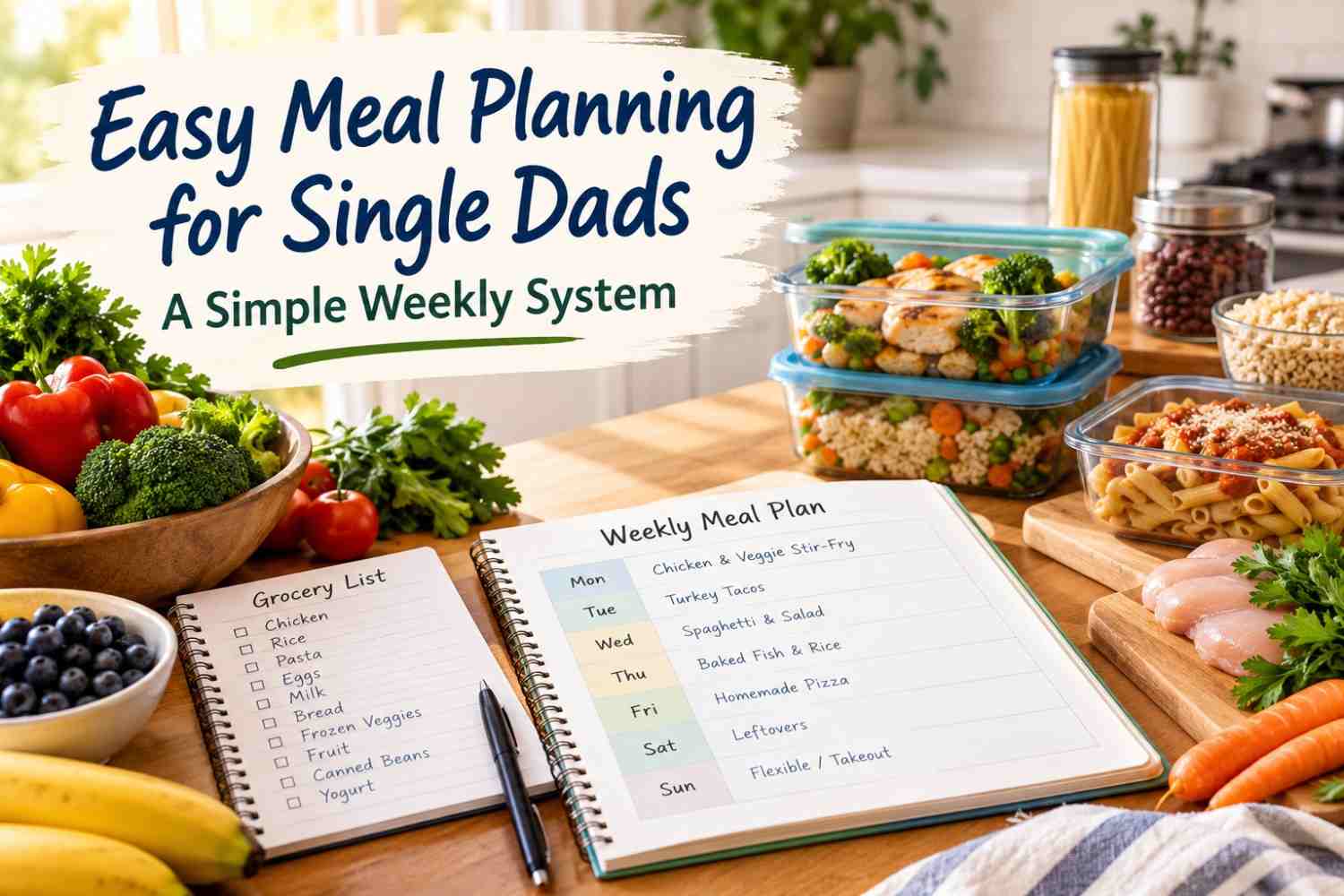
Easy Meal Planning for Single Dads: A Simple Weekly System
Balancing work, parenting, grocery shopping, and dinner can feel like a lot when you’re a single dad. After a long day, the last thing you may want to do is stand in the kitchen wondering what everyone should eat.
That’s where a simple meal plan can help.
You don’t need expensive ingredients, complicated recipes, or an entire Sunday spent cooking. A little planning can make weeknight dinners easier, help you use groceries more efficiently, and give you more time to enjoy with your kids.
In this guide, you’ll learn how to build a flexible weekly meal plan, organize your grocery shopping, prepare for busy evenings, and get your children involved in age-appropriate ways.
The goal isn’t to make every dinner perfect. It’s to create a routine that works for your family, even when life gets unpredictable.
1. Start With a Realistic Weekly Meal Plan
The easiest way to make meal planning manageable is to keep your first plan simple. Instead of choosing seven completely different dinners, plan five meals, set aside one night for leftovers, and leave one night flexible.
This gives you structure without making every evening feel like another deadline.
Here’s an example of a simple weekly plan:
| Day | Dinner idea | Why it works |
|---|---|---|
| Monday | Chicken and rice bowls | Easy to customize with different vegetables |
| Tuesday | Spaghetti with tomato sauce | A familiar family favorite |
| Wednesday | Quesadillas with beans and cheese | Quick to assemble |
| Thursday | Sheet-pan chicken and vegetables | Less hands-on cooking |
| Friday | Homemade burgers or veggie burgers | A relaxed end-of-week dinner |
| Saturday | Leftovers or a simple soup | Uses food you already have |
| Sunday | Flexible family favorite | Leaves room for changing plans |
Treat this as a starting point, not a strict menu. Swap meals around when work runs late, your child requests something different, or an ingredient isn’t available.
A helpful tip: Write your dinner plan somewhere visible, such as a kitchen whiteboard, a paper calendar, or your phone’s notes app. When everyone knows what’s for dinner, you can spend less time making last-minute decisions.
2. Choose Simple Meals Your Family Already Enjoys
You don’t need to introduce seven new recipes every week. Familiar meals are often easier to shop for, prepare, and serve, especially when your children have strong food preferences.
Start by listing five to ten meals your family already likes. Choose options that fit your cooking skills, budget, available equipment, and schedule.
Your list might include:
- Spaghetti with meat or lentil sauce
- Chicken and vegetable rice bowls
- Baked potatoes with simple toppings
- Tacos or quesadillas
- Scrambled eggs with toast and fruit
- Homemade pizza using prepared dough or flatbread
- Bean and cheese burritos
- Simple pasta with vegetables
Keep the list somewhere you can find it easily. When you’re planning the next week, choose from this collection rather than starting from scratch.
You can also create a few categories:
- Very quick meals: For evenings when you’re exhausted.
- Family favorites: Meals most people at home enjoy.
- Try-something-new meals: One new recipe when you have time.
- Backup meals: Options made with ingredients you usually keep on hand.
This approach gives you variety without adding unnecessary work.
Remember, simple food can still make a satisfying family dinner. You don’t have to prepare a restaurant-style meal to create a pleasant evening with your kids.
3. Set a Weekly Food Budget Before Shopping
Meal planning becomes easier when you know how much you can comfortably spend on groceries.
Start by choosing a realistic weekly food budget based on your household size, local prices, dietary needs, and the groceries you already have. There isn’t one ideal amount for every family, so use a figure that fits your circumstances.
Next, divide your budget into broad categories, such as:
- Proteins, including beans, eggs, chicken, or other family favorites
- Vegetables and fruit
- Grains, rice, pasta, bread, or potatoes
- Dairy or suitable alternatives
- Pantry essentials and seasonings
You don’t need to calculate every dollar perfectly. The goal is to make intentional choices before you reach the checkout.
Four ways to make your budget work harder:
- Plan around ingredients you already own. Check your pantry and freezer before adding items to your list.
- Compare unit prices. A larger package isn’t always the better value if you won’t use it.
- Choose versatile ingredients. Rice, beans, pasta, eggs, and seasonal vegetables can work in many different meals.
- Limit impulse purchases. A written shopping list makes it easier to focus on what your family actually needs.
You can also plan one or two meals around ingredients that are on sale, provided they fit your family’s preferences and you can store them safely.
A food budget should help you feel more organized, not guilty. If prices rise or your schedule changes, adjust the plan rather than abandoning it.
4. Check Your Pantry, Refrigerator, and Freezer First
Before making a grocery list, take a few minutes to see what you already have.
It’s easy to buy another package of pasta, another bag of frozen vegetables, or another jar of sauce simply because you forgot what was in the cupboard. Checking your supplies first can help prevent unnecessary purchases and reduce food waste.
Try this quick inventory routine.
Step 1: Check your pantry.
Look for rice, pasta, canned beans, tomatoes, cooking oil, seasonings, and other shelf-stable ingredients.
Step 2: Check your refrigerator.
See which vegetables, dairy products, sauces, and other refrigerated foods need to be used soon. Follow package dates and food-storage instructions.
Step 3: Check your freezer.
Look for frozen vegetables, meat, prepared portions, bread, and other ingredients that can contribute to a planned dinner.
Step 4: Choose one or two meals around what you find.
For example, if you already have rice, canned beans, and frozen vegetables, you may only need a few additional ingredients for a rice bowl.
Step 5: Add only the missing ingredients to your grocery list.
Keep the list on your phone or somewhere accessible so you can update it throughout the week.
A small habit like this can make grocery shopping more deliberate. It also teaches children that food has value and that using what you already have is part of taking care of a household.
5. Create a Grocery List That’s Easy to Follow
Once you’ve chosen your meals, turn them into one organized shopping list.
A list arranged by food category is often easier to use than a list containing ingredients in the order you thought of them. It can also help you avoid walking back and forth through the store.
Here’s a simple example:
| Category | Possible items |
|---|---|
| Produce | Onions, carrots, broccoli, apples, bananas |
| Protein | Chicken, eggs, beans, or another preferred protein |
| Grains and bread | Rice, pasta, tortillas, bread |
| Dairy or alternatives | Milk, yogurt, cheese, or suitable alternatives |
| Pantry staples | Canned tomatoes, cooking oil, seasonings |
| Frozen foods | Frozen vegetables or other planned ingredients |
Use this as a template rather than buying every item each week.
Before shopping, match each ingredient to a planned meal. If you need chicken for two dinners, calculate how much your family will reasonably use. If you already have enough rice, leave it off the list.
You can also mark items as essential, optional, or already have. That makes it easier to adjust your shopping trip when the budget is tight.
If your children come shopping with you, give them a simple job, such as checking off items or finding a particular fruit. Keep the task appropriate for their age and your shopping environment.
The best grocery list is one you’ll actually use. It doesn’t need a special app, a fancy printable, or a complicated spreadsheet.
Read More: https://papascare.com/screen-free-activities-for-toddlers/: Easy Meal Planning for Single Dads: A Simple Weekly System6. Reuse Ingredients Across Multiple Meals
Cooking different meals doesn’t always require buying completely different ingredients.
One of the simplest meal-planning strategies is to choose a few versatile ingredients and use them in different ways throughout the week. This can simplify shopping and help you use food before it goes to waste.
For example, a grocery trip might include rice, chicken, beans, bell peppers, onions, and tomatoes.
You could use those ingredients to prepare:
- Monday: Chicken and vegetable rice bowls.
- Tuesday: Chicken and bean burritos.
- Wednesday: Rice with beans and sautéed vegetables.
- Thursday: Chicken and vegetable skillet with a different seasoning.
- Friday: A simple tomato-based rice dish using suitable remaining ingredients.
These meals share some ingredients, but you can vary the seasonings, textures, and toppings to make them feel different.
Here are a few more ingredient combinations to consider:
| Ingredient | Different ways to use it |
|---|---|
| Eggs | Breakfast-for-dinner, egg sandwiches, vegetable omelets |
| Potatoes | Baked potatoes, potato wedges, vegetable hash |
| Beans | Tacos, burritos, soups, rice bowls |
| Pasta | Tomato pasta, vegetable pasta, pasta salad |
| Tortillas | Quesadillas, wraps, tacos |
| Frozen vegetables | Rice bowls, pasta, soups, stir-fries |
Choose combinations that suit your family’s dietary needs and preferences. Refrigerate perishable ingredients promptly, and don’t assume that food remains safe indefinitely just because it is part of a meal plan.
The main idea: Buy ingredients with a purpose. When several meals can use the same groceries, planning becomes simpler and shopping becomes more focused.
7. Keep a Few Quick Backup Dinners Ready
Some evenings won’t go according to plan. A meeting may run late, your child may have an after-school activity, or you may simply be too tired to cook the meal you planned.
That’s why a good meal plan needs a backup plan.
Choose three or four dinners that require little preparation and use ingredients you can keep available.
Some possibilities include:
- Scrambled eggs, toast, and fruit
- Bean and cheese quesadillas
- Pasta with a simple sauce
- Rice bowls with frozen vegetables and a suitable protein
- Baked potatoes with beans or cheese
- Soup served with bread
- Sandwiches with fruit and vegetables on the side
Pick options that your family will actually eat. There’s little value in keeping ingredients for a quick meal if nobody likes it.
You can also prepare a short list of emergency dinners and place it on the refrigerator. When the day gets overwhelming, choose one instead of ordering takeout automatically or skipping a proper meal.
If you have room in your freezer, you may keep a few appropriately portioned, homemade meals for particularly busy nights. Label them with the contents and date, and follow safe freezing, thawing, and reheating practices.
The goal isn’t to eliminate spontaneous meals. It’s to make sure a difficult day doesn’t leave you starting dinner from nothing.
8. Prepare Ingredients Ahead Without Spending All Sunday Cooking
Meal preparation can be useful, but it doesn’t have to mean cooking every meal for the next seven days.
If a long meal-prep session doesn’t fit your schedule, try preparing a few ingredients in short bursts instead.
For example, you could spend 15 to 20 minutes after grocery shopping on tasks that make later dinners easier.
Small preparation tasks worth considering:
- Wash and prepare vegetables that need it.
- Portion ingredients for a planned recipe.
- Mix a simple sauce or seasoning blend.
- Divide suitable ingredients into meal-sized portions.
- Check that lunch containers and basic cooking supplies are ready.
- Move frozen ingredients to the refrigerator in time for safe thawing, when appropriate.
You can also prepare while doing another routine kitchen task, provided you can supervise the food and equipment safely.
Choose tasks based on your actual menu. Preparing ingredients you won’t use simply creates more work.
Remember that cut produce, cooked foods, meat, dairy, and other perishable ingredients need appropriate storage. Follow reliable food-safety guidance for refrigeration, freezing, and storage times.
If you prefer to cook everything fresh, that’s fine too. A written meal plan and an organized grocery list can still save you from making repeated decisions during the week.
The best preparation routine is the one that reduces your workload rather than adding another obligation.
9. Make Room for Picky Eaters and Changing Preferences
Meal planning can become frustrating when your child suddenly decides they no longer like a food they happily ate last week.
Children’s preferences can change, and some children need repeated, low-pressure opportunities to become comfortable with unfamiliar foods. A practical meal plan should leave room for this rather than expecting every dinner to be accepted immediately.
Try these approaches to make family meals easier:
Keep at least one familiar food available.
When practical, serve a familiar food alongside the rest of the meal. That might be rice, bread, fruit, or another suitable option your child usually accepts.
Offer choices within the meal you’ve planned.
For example, let your child choose between two vegetables or decide whether to add a particular topping. You can offer choices without preparing an entirely separate dinner.
Serve new foods without pressure.
Let children explore unfamiliar foods at their own pace. Avoid turning every meal into a negotiation or insisting that a child finish everything on the plate.
Invite children to help choose future meals.
Ask each child to suggest one dinner for the coming week. You can then fit those suggestions into your budget and schedule.
Keep the routine flexible.
If a planned meal doesn’t work for your family, adjust it and make a note for next time. You don’t have to repeat a recipe simply because it appeared on the weekly menu.
For single dads, the aim is to create a predictable, welcoming mealtime routine without adding unnecessary stress. You can offer balanced choices, respect your child’s appetite, and maintain reasonable family expectations at the same time.
If you have ongoing concerns about your child’s growth, nutrition, or extremely restricted eating, seek advice from an appropriate pediatric healthcare professional rather than relying on meal-planning tips alone.
10. Involve Your Kids in Age-Appropriate Meal Planning
Meal planning doesn’t have to be something you do entirely on your own. Inviting your children to participate can make family meals more enjoyable and help them learn useful everyday skills.
You don’t need to give them control over the entire menu. Start with small choices and simple tasks that fit their ages and abilities.
Here are a few ways to involve your kids:
- Let them choose a meal: Ask each child to suggest one dinner for the coming week from a few options you know are practical.
- Give them a grocery-list job: Older children can help check which ingredients you already have at home.
- Invite them to wash produce: Children can help rinse suitable fruits and vegetables under supervision.
- Let them assemble their own plates: Offer a few appropriate components, such as rice, beans, vegetables, and a protein, and let them choose how to combine them.
- Teach simple kitchen habits: Show them how to wash their hands, clean up after preparing food, and put away appropriate items.
You can also make meal planning a short weekly family activity. Spend a few minutes looking at the upcoming schedule and asking what everyone would like to eat.
For example, if Wednesday is a busy evening because of school activities, choose a quick dinner. If Saturday is more relaxed, you might prepare a new recipe together.
Always match tasks to your child’s age and ability. Young children should not handle sharp knives, hot pans, or other dangerous equipment, and cooking activities need appropriate adult supervision.
The goal isn’t to turn your children into little chefs. It’s to help them feel included while making everyday family life easier to manage.
11. Use Leftovers Strategically
Leftovers can make your weekly meal plan more flexible, reduce unnecessary food waste, and save you from cooking a completely new dinner every evening.
The trick is to plan for leftovers before you start cooking.
For example, if you’re preparing chicken and rice on Monday, you might cook enough suitable ingredients for another meal later in the week. The extra chicken could become a filling for wraps or a topping for a rice bowl.
Here are some simple ways to reuse ingredients:
| Original meal | Possible second meal |
|---|---|
| Roasted chicken | Chicken wraps or rice bowls |
| Cooked beans | Tacos, quesadillas, or soup |
| Roasted vegetables | Pasta or a grain bowl |
| Cooked rice | A properly handled rice-based skillet meal |
| Tomato pasta sauce | A topping for homemade pizza or a base for another dish |
Only plan a second meal when the ingredients are suitable for reuse and can be stored safely.
Follow these food-safety habits:
- Refrigerate perishable leftovers promptly, ideally within two hours of cooking, or within one hour when temperatures are above 90°F (32°C).
- Store leftovers in shallow containers so they cool quickly.
- Keep your refrigerator at 40°F (4°C) or below.
- Use refrigerated leftovers within three to four days, following USDA guidance.
- Reheat leftovers to an internal temperature of 165°F (74°C), using a food thermometer when appropriate.
Rice and other cooked foods also require prompt cooling and proper storage. Don’t leave cooked food sitting at room temperature for extended periods.
If you don’t expect to eat the leftovers within the recommended refrigerated storage period, freeze them promptly in suitable portions.
Planning leftovers should make dinner easier, not create uncertainty about whether food is safe to eat.
12. Make Weeknight Cooking Easier With a Repeatable Routine
A predictable evening routine can help reduce the number of decisions you need to make after work.
Instead of figuring everything out when you’re already hungry and tired, follow a simple sequence that works for your household.
Step 1: Check the menu.
Look at your weekly plan and confirm what’s for dinner. If the schedule has changed, choose one of your backup meals.
Step 2: Check the ingredients.
Make sure the main ingredients are available and properly thawed if necessary. Never thaw perishable foods on the kitchen counter.
Step 3: Start with the longest task.
If the meal involves rice, roasting vegetables, or baking, start with the task that takes the most time.
Step 4: Keep the kitchen organized.
Gather the ingredients and equipment you need before you begin. Put away items as you go when it is safe and practical.
Step 5: Give children a suitable role.
Depending on their age, children might set the table, wash produce, or help arrange cold ingredients. Keep them away from hot surfaces and sharp tools.
Step 6: Make cleanup manageable.
Wash or soak used cookware as appropriate, store leftovers safely, and return ingredients to their proper storage locations.
You can adjust the routine to your own schedule. If you work late on Tuesdays, make Tuesday a backup-meal night. If your children have activities on Thursdays, choose something that requires little hands-on cooking.
A routine should support your family, not dictate every minute of the evening.
13. Build a Short List of Reliable Family Recipes
One of the easiest ways to simplify meal planning is to create a personal collection of meals you know how to prepare.
You don’t need a large cookbook or an elaborate digital system. A simple note on your phone can be enough.
Start with 10 to 15 reliable recipes and divide them into categories.
Quick dinners
- Eggs with toast and fruit
- Quesadillas with beans and cheese
- Pasta with a simple sauce
Budget-friendly meals
- Bean and rice bowls
- Lentil soup
- Baked potatoes with suitable toppings
Family favorites
- Homemade pizza
- Chicken and vegetable bowls
- Tacos with customizable fillings
Meals for busy evenings
- A freezer meal prepared and stored safely in advance
- Soup with bread
- Sandwiches with fruit and vegetables
Adapt these examples to your family’s tastes, dietary requirements, and local grocery prices.
For each recipe, record the ingredients, approximate preparation time, and any adjustments your family prefers. You could also note whether it produces useful leftovers.
When you plan the next week, choose meals from your collection and add one new recipe if you feel like trying something different.
Over time, you’ll build a system around meals you already know, instead of repeatedly searching for recipes and buying ingredients you may never use again.
14. Adapt Your Plan to Your Parenting Schedule
A meal plan should fit your real life, including work commitments, school activities, changes in custody arrangements, and the days when your children are with you.
There’s no need to use the same schedule every week if your circumstances change.
When your children are with you on alternating days
Plan meals around the days they’ll be home. Choose suitable portions, and consider ingredients that can be used in your own meals on other days.
When you have a demanding workweek
Keep the busiest evenings simple. Choose meals with fewer preparation steps and save more involved recipes for days when you have additional time.
When your children have after-school activities
Plan dinners that can be prepared quickly or assembled with minimal cooking after you return home.
When your schedule changes unexpectedly
Move meals around rather than treating the original plan as fixed. Frozen ingredients and shelf-stable backup meals can help you adapt.
When you have limited cooking experience
Repeat familiar recipes until you’re comfortable with them. Introduce new techniques gradually rather than attempting several unfamiliar dishes in the same week.
You can also use a shared calendar if another caregiver needs to coordinate meals, school activities, or food preferences with you.
The most effective meal plan is one that reflects your family’s actual routine. Flexibility isn’t a failure of planning. It’s one of the things that makes planning useful.
15. Use a Simple Weekly Meal Planner
A weekly meal planner brings your menu, shopping list, and preparation tasks together in one place.
You can use a notebook, a spreadsheet, a phone app, or a printable sheet. Choose whatever you’ll remember to check.
Here’s a simple template you can copy and reuse.
Weekly Dinner Planner
| Day | Planned dinner | Ingredients to check |
|---|---|---|
| Monday | Chicken and rice bowls | Chicken, rice, vegetables |
| Tuesday | Spaghetti with tomato sauce | Pasta, tomatoes, seasonings |
| Wednesday | Bean and cheese quesadillas | Beans, tortillas, cheese |
| Thursday | Sheet-pan chicken and vegetables | Chicken, potatoes, vegetables |
| Friday | Homemade pizza | Pizza base, sauce, toppings |
| Saturday | Leftovers or soup | Available leftovers or soup ingredients |
| Sunday | Flexible family favorite | Ingredients based on your choice |
This is an example menu, not a prescribed diet. Substitute meals to suit your household’s preferences, dietary needs, and budget.
Your Weekly Planning Checklist
- Check the upcoming family schedule.
- Review your pantry, refrigerator, and freezer.
- Choose five planned dinners.
- Select one leftovers night and one flexible night.
- Write a grocery list organized by category.
- Check prices and adjust the list to your budget.
- Prepare a few ingredients ahead if useful.
- Keep backup meals available for busy evenings.
- Store and handle food safely throughout the week.
You don’t need to complete every preparation task at once. Start with the menu and shopping list, then add other steps as they become useful.
After a few weeks, review what worked. If a meal was too time-consuming, replace it. If a particular dinner was popular and easy to prepare, keep it in your recipe collection.
The aim is to build a repeatable system that saves effort over time, not another task that makes your schedule harder to manage.
Comparison Table: Which Meal-Planning Approach Works Best?
Different households need different levels of planning. Use this comparison to choose the method that best fits your schedule.
| Approach | Best for | Main benefit | Potential drawback |
|---|---|---|---|
| Plan each dinner in advance | Parents who like structure | Clear menu and shopping list | Can feel restrictive when plans change |
| Use a flexible weekly template | Busy single parents | Easy to adapt around work and family life | Requires backup options |
| Batch-cook selected meals | Parents with preparation time | Reduces cooking on future evenings | Requires upfront time and storage space |
| Cook from pantry staples | Budget-conscious households | Makes use of existing ingredients | May require flexibility with recipes |
| Plan leftovers intentionally | Families trying to reduce waste | Fewer entirely new meals to prepare | Requires safe storage and timely use |
My recommendation: Start with a flexible weekly template. Plan five dinners, leave one night for leftovers, and keep one night open. Add batch cooking or more detailed preparation only if it genuinely makes your week easier.
Conclusion: Make Meal Planning Work for Your Family
Meal planning doesn’t have to involve complicated recipes, expensive ingredients, or hours of preparation. A few familiar meals, a practical grocery list, and a flexible weekly routine can make family dinners easier to manage.
Start small. Choose five dinners for next week, check what you already have, and keep one or two backup meals ready for unexpected busy evenings.
As you repeat the process, you’ll discover which meals suit your schedule, which ingredients your family uses most, and which planning habits save you the most effort.
Most importantly, remember that the goal isn’t to create a perfect menu. It’s to make everyday life a little more manageable so you can spend less time worrying about dinner and more time enjoying life with your children.
Save this guide for your next grocery trip, and use the weekly planner and checklist to start building a meal-planning routine that works for you.