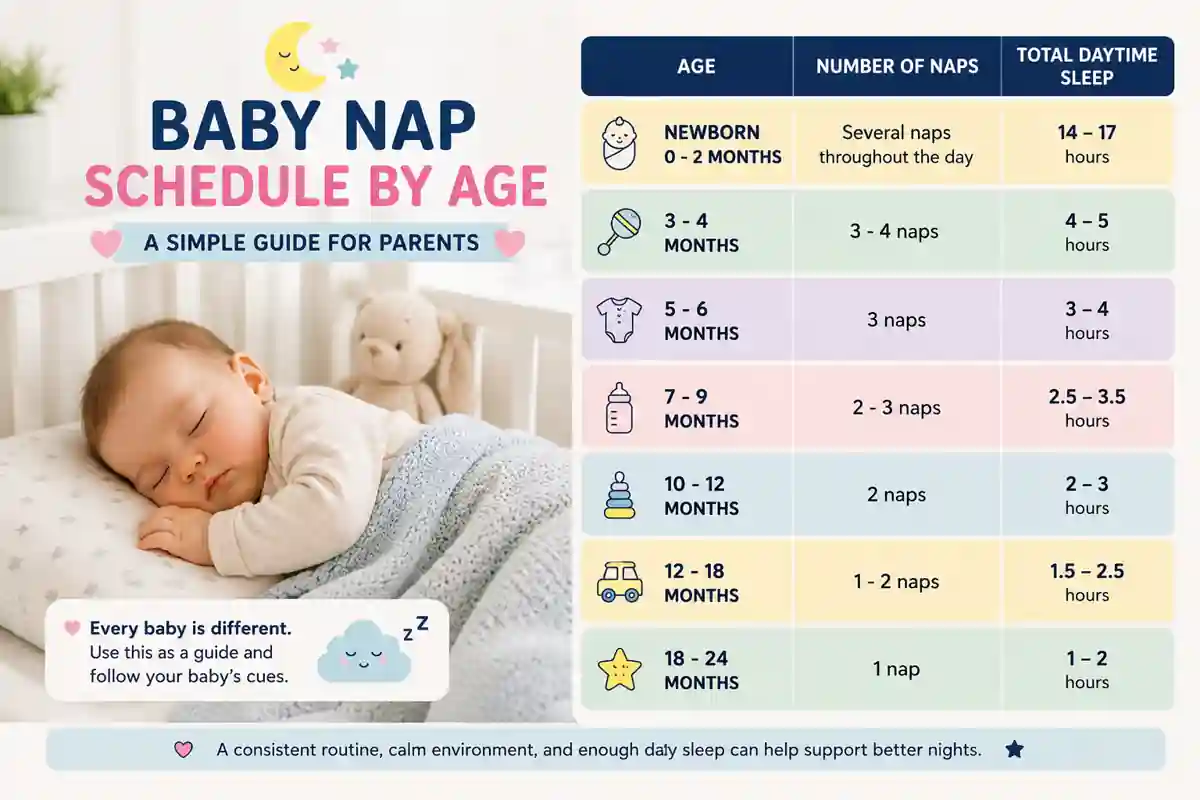
Baby Nap Schedule by Age: A Simple Guide for Parents
If you are wondering how often your baby should nap during the day, you are not alone.
Babies’ sleep needs change quickly during the first year of life. A newborn may sleep several times throughout the day, while an older baby may gradually move toward fewer and longer naps.
Understanding typical sleep patterns can help parents create a routine that fits their baby’s age and individual needs.
But remember: there is no single perfect nap schedule for every baby.
Why Are Baby Naps Important?
Daytime sleep plays an important role in a baby’s overall sleep pattern.
Babies need plenty of sleep because their bodies and brains are developing rapidly. Regular naps can also help prevent a baby from becoming overly tired.
When a baby becomes overtired, settling down for sleep may sometimes become more difficult.
A good nap routine can therefore be one part of a healthy daily rhythm.
Baby Nap Schedule by Age
Every baby is different, but the following guide can give parents a general idea of how daytime sleep patterns may change.
| Age | Typical Nap Pattern |
|---|---|
| Newborn | Several naps throughout the day |
| 3–4 months | Around 3–4 naps |
| 5–6 months | Around 3 naps |
| 7–9 months | Around 2–3 naps |
| 10–12 months | Around 2 naps |
| 12–18 months | Usually 1–2 naps |
| 18–24 months | Usually 1 nap |
These are general patterns, not strict rules. Your baby’s individual sleep needs may be different.
Newborn Nap Schedule
Newborns do not usually follow a predictable daytime schedule.
During the first weeks, babies may sleep for short periods throughout the day and night. Their sleep is often closely connected with feeding.
Instead of trying to establish a strict timetable, focus on responding to your newborn’s hunger and sleep cues.
A newborn’s day might look something like:
Feed → Awake time → Sleep → Feed → Awake time → Sleep
The exact timing can vary considerably.
What Parents Should Remember
Don’t worry if your newborn’s naps seem unpredictable.
At this stage, establishing a rigid schedule is usually less important than making sure your baby is fed, comfortable, and getting adequate opportunities for sleep.
Internal link: Add a link here to your Newborn Sleep Schedule article.
3–4 Months: Developing a More Predictable Pattern
Around this age, some babies begin developing a more recognizable sleep pattern.
Many babies may take several naps during the day, although the timing and length can vary.
You may notice that your baby begins to have:
- A longer nighttime sleep period
- Several daytime naps
- More predictable periods of being awake
- A clearer bedtime routine
This can be a good time to introduce consistent sleep cues.
5–6 Months: Around Three Naps
Many babies around this age may take approximately three naps during the day.
A simple pattern could be:
Morning nap → Afternoon nap → Late afternoon nap
The final nap may gradually become shorter or eventually disappear as your baby grows.
Don’t worry if your baby’s schedule doesn’t look exactly like another baby’s.
7–9 Months: Moving Toward Two Naps
As babies get older, many begin transitioning toward two main daytime naps.
A typical pattern might include:
Morning Nap
Usually occurs a few hours after waking.
Afternoon Nap
Usually occurs after the baby’s midday activities and feeding.
Some babies may still need a short third nap during the transition.
Developmental changes, teething, illness, travel, and changes in routine can also temporarily affect naps.
10–12 Months: Usually Two Naps
Around this age, many babies continue taking two naps.
For example:
Morning: Nap
Afternoon: Nap
Night: Longer nighttime sleep
The exact timing will depend on when your baby wakes in the morning and when they go to bed.
As your baby approaches their first birthday, you may notice that one nap becomes easier to maintain than another.
12–18 Months: Transitioning Toward One Nap
During the second year, many toddlers gradually transition from two naps to one.
This transition does not happen at exactly the same age for every child.
Some toddlers may continue taking two naps for a while, while others may be ready for one longer midday nap.
Signs that your toddler may be ready for a transition can include:
- Regularly refusing one of the naps
- Taking a long time to fall asleep for one nap
- Bedtime becoming unusually difficult
- Sleeping well with one longer daytime nap
If your child is happy and sleeping well, there is usually no need to rush the transition.
18–24 Months: One Main Nap
By this age, many toddlers have moved to one daytime nap.
A common pattern is:
Morning: Wake up
Midday: Nap
Afternoon: Wake and activities
Evening: Bedtime
The midday nap may become longer and more consistent.
Again, individual needs vary.
How Long Should a Baby Nap?
Nap length can vary significantly.
Some babies take short naps of 20–30 minutes, while others may sleep for one or two hours.
A short nap does not automatically mean something is wrong.
What matters is looking at your baby’s overall sleep, mood, feeding, growth, and development rather than focusing on one individual nap.
How to Create a Healthy Nap Routine
You don’t need to follow a complicated schedule.
Try these simple strategies.
1. Watch for Sleep Cues
Look for signs that your baby is becoming tired.
These may include:
- Yawning
- Rubbing their eyes
- Becoming fussy
- Losing interest in activities
- Becoming quieter than usual
Try to start the nap routine before your baby becomes extremely overtired.
2. Keep a Consistent Routine
A short routine can help your baby understand that nap time is approaching.
For example:
Diaper change → Curtains closed → Quiet cuddle → Short song → Sleep
You can use the same routine each day.
3. Keep the Sleep Environment Calm
A quiet, comfortable and appropriately dark sleep environment can help make nap time easier.
Try to reduce unnecessary noise and distractions.
4. Don’t Force a Nap
Sometimes your baby simply won’t sleep.
If your baby is calm and happy, you may not need to force them to stay in bed.
Try again later while keeping the overall daily routine reasonably consistent.
What If My Baby Suddenly Stops Napping?
It’s common for babies’ sleep patterns to change.
A baby who normally naps well may suddenly resist naps.
Possible reasons can include:
- Developmental changes
- Changes in routine
- Illness
- Teething
- Travel
- Changing sleep needs
- Transitioning between nap patterns
Try not to panic after a few difficult days.
Look at the overall pattern rather than one bad nap.
Baby Nap Schedule vs. Baby Sleep Schedule
A nap schedule focuses specifically on daytime sleep.
A complete sleep schedule considers both daytime and nighttime sleep.
If you’re trying to understand your baby’s total sleep needs, see our guide:
Best Baby Sleep Schedule by Age
🔗 Link this phrase to your existing article.
You can also read:
How to Create a Bedtime Routine for Your Baby
🔗 Link this phrase to the article we just created.
Safe Sleep Reminder
Whenever your baby sleeps, follow current safe-sleep recommendations appropriate for their age.
For infants, parents should pay particular attention to the baby’s sleep position, sleep surface, bedding, and surrounding objects.
If you have questions about safe sleep, consult a qualified healthcare professional or an authoritative child-health organization.
Final Thoughts
There is no perfect baby nap schedule.
Your baby’s sleep needs will change as they grow, and some days will be different from others.
Instead of trying to make your baby fit a strict timetable, use age-appropriate patterns as a guide and pay attention to your baby’s individual sleep cues.
A simple routine, a calm sleep environment, and realistic expectations can make daytime sleep easier for both babies and parents.
And remember, a good nap schedule is one that supports your baby’s needs and works realistically for your family.
Frequently Asked Questions
How many naps does a newborn need?
Newborns generally sleep several times throughout the day rather than following a fixed nap schedule. Their sleep is often closely connected to feeding and their individual needs.
When do babies go from three naps to two?
Many babies gradually make this transition during the second half of the first year, but there is considerable individual variation.
When do babies transition to one nap?
Many children transition to one main daytime nap during the second year, but the timing varies from child to child.
How long should a baby nap?
Nap length varies by age and individual child. Some naps may be short, while others can last much longer.
Should I wake my baby from a nap?
Whether to wake a baby depends on their age, overall sleep pattern, feeding needs, and individual circumstances. If you’re unsure, particularly with a young infant, discuss your baby’s sleep pattern with a healthcare professional.