Shaping the Future: How Early Habits and Routine Build Mental Strength
Every parent wants their child to grow up confident, healthy, and emotionally steady. What many people don’t realize is that mental strength doesn’t appear automatically. It develops through small, daily experiences—especially in the early years.
From birth to age seven, the brain is in its most absorbent state. Experts call this the Imprint Period, when children learn through observation more than instruction. Their everyday environment shapes everything: how they react to stress, how they think about themselves, and how they interact with the world.
The habits you build now will stay with them for life. Here’s how to create a routine that helps your child grow mentally strong, physically healthy, and emotionally secure.
1. Modeling: Kids Copy What They Watch
Parents often repeat the same sentence: “My child never listens!”
But children do listen—they just listen with their eyes.
The Mirror Neuron Reality
Kids learn emotional responses, communication patterns, and behaviors by watching the adults around them.
If a child sees a parent react to stress by yelling, they learn yelling as a coping tool.
If they watch a parent pause, breathe, and talk calmly, they absorb emotional regulation.
Practical Takeaway
Be the model.
Focus on your own sleep, diet, communication, and screen habits. When kids see you reading, exercising, or eating well, they naturally follow.
2. The Power of Routine and Quality Sleep
In a world full of noise and unpredictability, routine feels like safety for children. A predictable day lowers their stress and reduces emotional outbursts.
Why Sleep Matters More Than You Think
Healthy sleep supports:
- growth hormone release
- brain repair
- memory development
- emotional balance
A consistent bedtime helps children wake up happier and reduces daytime frustration.
Build Simple Daily Rhythms
You don’t need a strict schedule. Just try to keep:
- meal times
- outdoor play
- reading moments
- bedtime
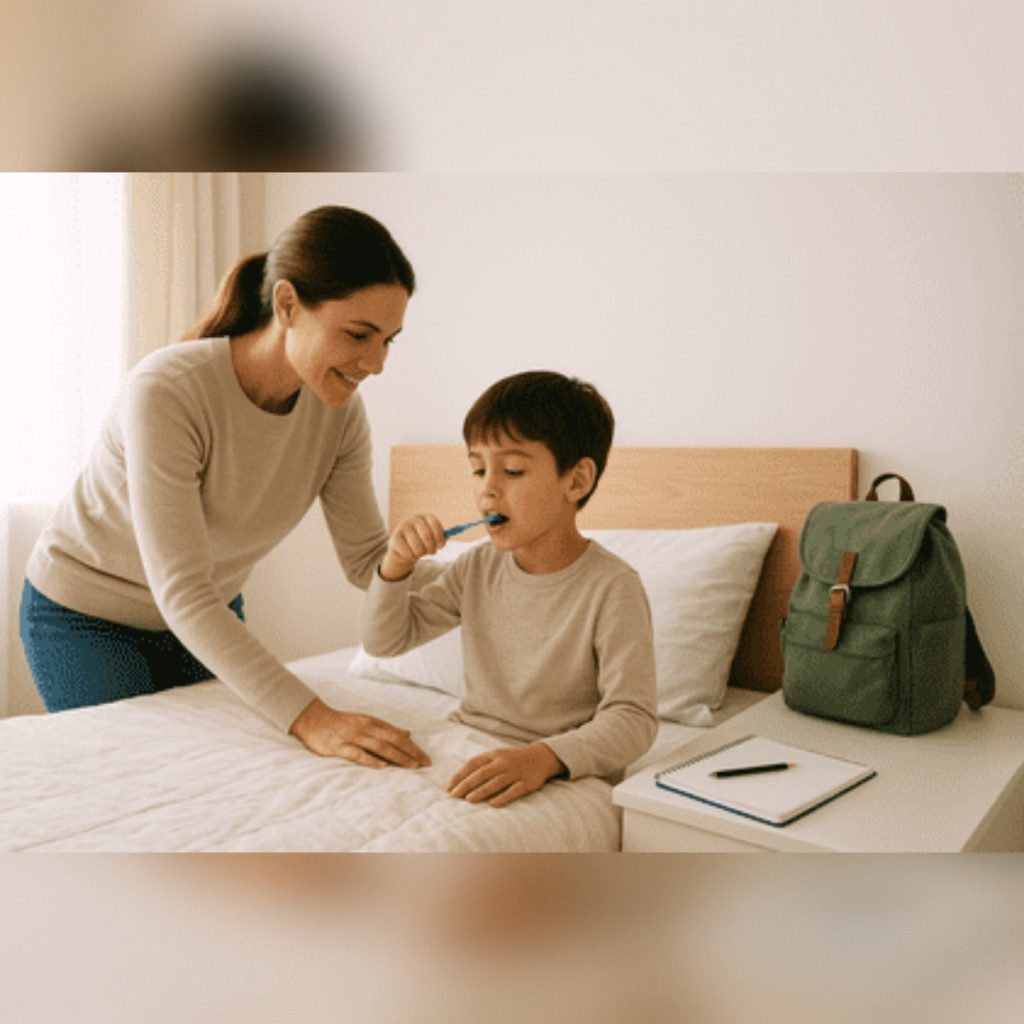
around the same time every day. This structure gives a sense of security.
Read More:
3. Outdoor Play: The Natural Brain Booster
Outdoor play is one of the most powerful tools for early childhood development. Yet many children are spending more hours indoors, on screens, and in controlled environments.
Why Outdoor Time Matters
Sensory and Motor Development:
Running, climbing, balancing, digging—these experiences build coordination, strength, and spatial awareness.
Risk Assessment:
When a child climbs a slide or jumps from a low height, they learn problem-solving and confidence.
Eye Health:
Sunlight and focusing at different distances help reduce childhood myopia.
Simple Ways to Add Green Time
- daily park visits
- backyard free play
- nature walks
- ball games
- chalk drawing outdoors
Kids who spend more time in nature show better focus and calmer behavior.
4. Discipline That Builds Inner Strength
Discipline isn’t about punishment—it’s about teaching self-control and emotional stability.
Avoid Fear-Based Discipline
Shouting, shaming, or hitting creates short-term obedience but long-term anxiety. It also teaches children to hide mistakes rather than learn from them.
Use the Authoritative Approach
This style is widely recommended in American child development research. It combines:
- clear rules
- high expectations
- kindness
- explanations
A Better Way to Correct Behavior
Instead of:
“Stop crying or I’ll give you something to cry about.”
Try:
“I see you’re upset. We don’t hit. Let’s calm down and try again.”
This helps them build emotional vocabulary and problem-solving skills.
5. Early Learning: Books Before Screens
Screens are everywhere, and while technology is valuable, early exposure can affect attention span and emotional development.
The American Academy of Pediatrics recommends:
- no screen time under 18 months (except video calls)
- very limited high-quality content after age two
- co-viewing with adults whenever possible
Why Books Are Superior
Reading:
- builds language skills
- strengthens imagination
- improves bonding
- increases concentration
Encourage Open-Ended Play
Toys that allow creativity—blocks, puzzles, pretend play items, art materials—give children a chance to think independently. In contrast, screens do all the work for them.
6. The 0–7 Brain Development Window
During early childhood:
- the brain grows faster than at any other age
- habits form neurological pathways
- emotional patterns become long-term traits
Children who grow up with routines, outdoor play, healthy food, and emotionally stable parenting develop stronger executive function skills—like focus, organization, and emotional control.
These skills become the foundation for school success, confident social interactions, and long-term resilience.
Conclusion
Raising a strong child doesn’t require expensive tutors, fancy gadgets, or complicated parenting systems. Strength comes from the small things—day-to-day habits, the tone of the household, and the rhythm of family life.
When you focus on consistent routines, positive modeling, outdoor play, limited screen exposure, and calm discipline, you’re giving your child a lifelong advantage. Even small changes can make a big difference.
Build healthy habits early, stay patient, and trust the process. Your child’s future strength grows from the choices you make today.